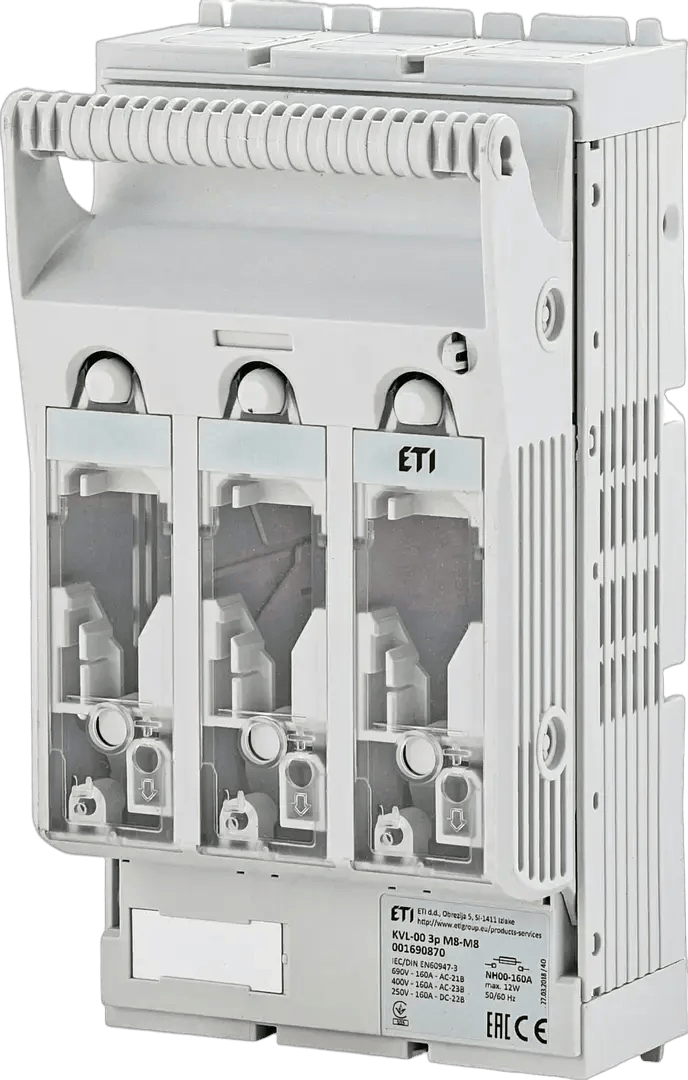
ETI product series
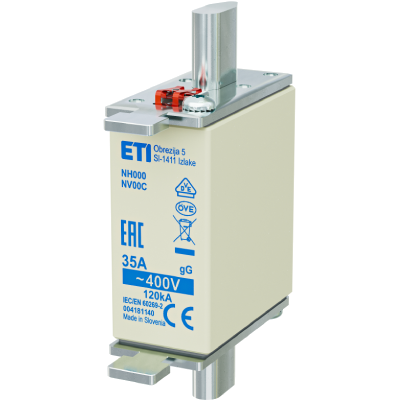
ETI Series of NH Battery Fuse Links
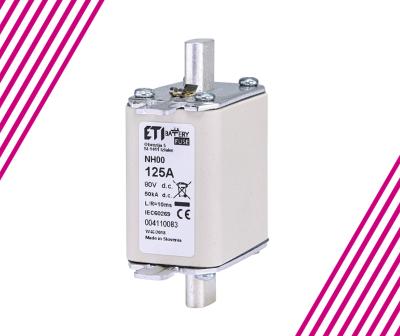
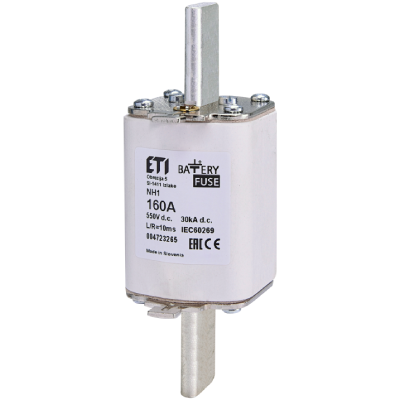
ETI offers a range of NH battery fuse links designed for various battery storage applications. These fuse-links are characterized by low power dissipation and fast time-current characteristics, providing enhanced protection for battery cells against overheating in case of a short circuit.
Detailed Specifications of NH Battery Fuse Links
ETI’s NH battery fuse links come in different sizes (00C, 00, 1C, 1, etc.) with varying specifications. Here is a summary of their key parameters:
General Specifications:
- Breaking Capacity: High breaking capacity suitable for battery protection.
- Time-Current Characteristics: Fuse-links have a steep characteristic, ensuring fast interruption of short circuit currents (within 5 seconds).
- Power Dissipation: Low power dissipation at nominal current and at 0.7 times the nominal current.
- Pre-arcing Joule integral: This value is given for each fuse type, which indicates the amount of energy the fuse element can handle before it starts to melt.
- Operating Joule integral: This value indicates the total energy the fuse can handle before it breaks the circuit.
Specific Series Information:
- NH00C and NH00: These sizes are available for 80V d.c. applications.
- NH1C and NH1: These sizes are available for 440V d.c. applications.
- NH00: Available for 550V d.c. applications.
- NH1, NH2, and NH3: These are available for 550V, 700V, and 800V d.c. applications, with a specific 3L version for 800V d.c..
- NH gBat XL: Designed for 1500V d.c. applications.
Additional Information:
- Fuse Selection: The operating point must be in adequate distance below the curve, and the short-circuit point must be above the range of tolerance of the curve.
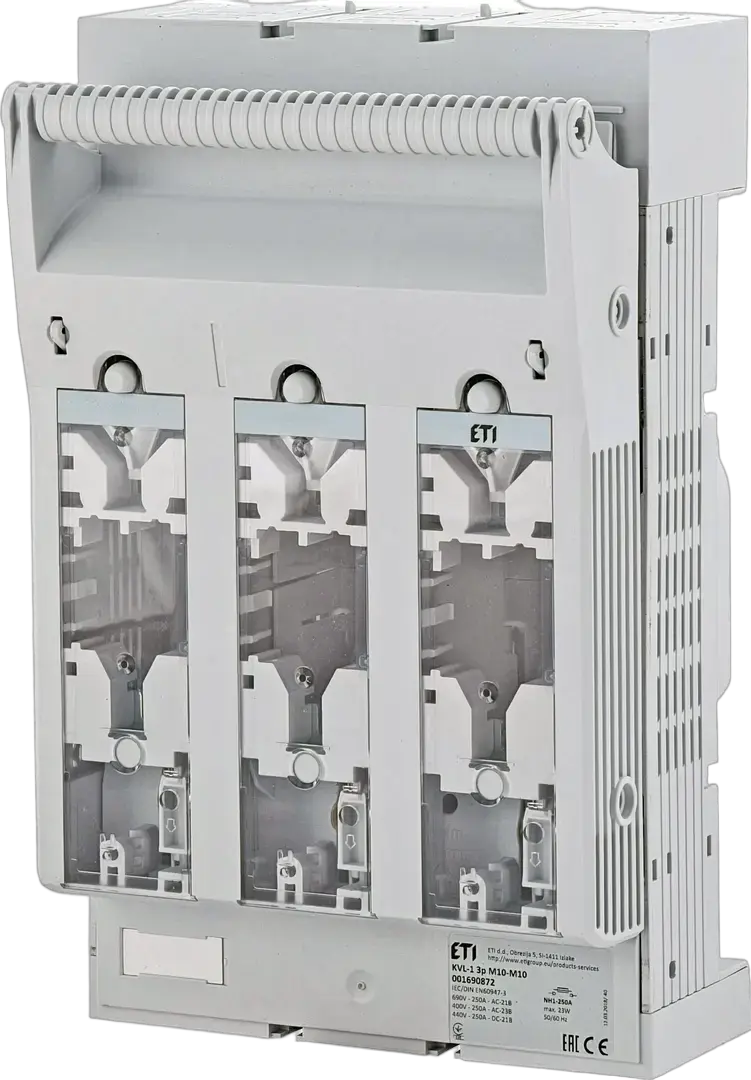
- Power Dissipation: When choosing a fuse switch disconnector, the fuse-link power dissipation must be considered. The power dissipation at the maximal operating current (Pd(IB)) can be calculated using the formula: Pd(IB)=(IB/In)2 x Pd(In).
- Parallel Connection: For increasing the rated current, fuse-links can be connected in parallel, but specific rules apply. The fuse-links must be the same type, size and rating and the current rating is lower than the sum of the single fuse-links.
- Temperature Influence: Ambient temperature affects the rated current, and a temperature derating factor should be applied.
- Indicators: Some fuse links come with standard and striker indicators.